
Neskeb operates a manufacturing facility located in Rajkot Gujarat accredited with ISO 9001:2015. With focus on growth, we have established a facility equipped with manufacturing and testing facilities to maintain the highest standards of quality and safety. We pride ourselves on being well-equipped with manufacturing and testing facilities for the entire range of our products, meeting quality standards.
We deliver exceptional quality and customized solutions tailored to our customers’ needs, driven by innovation, precision engineering, and customer satisfaction. Our innovative solutions and reputation for quality has helped us to build strong and lasting partnerships with our customers. We are committed to continuous improvement and maintain certification to the requirements of IS standards.
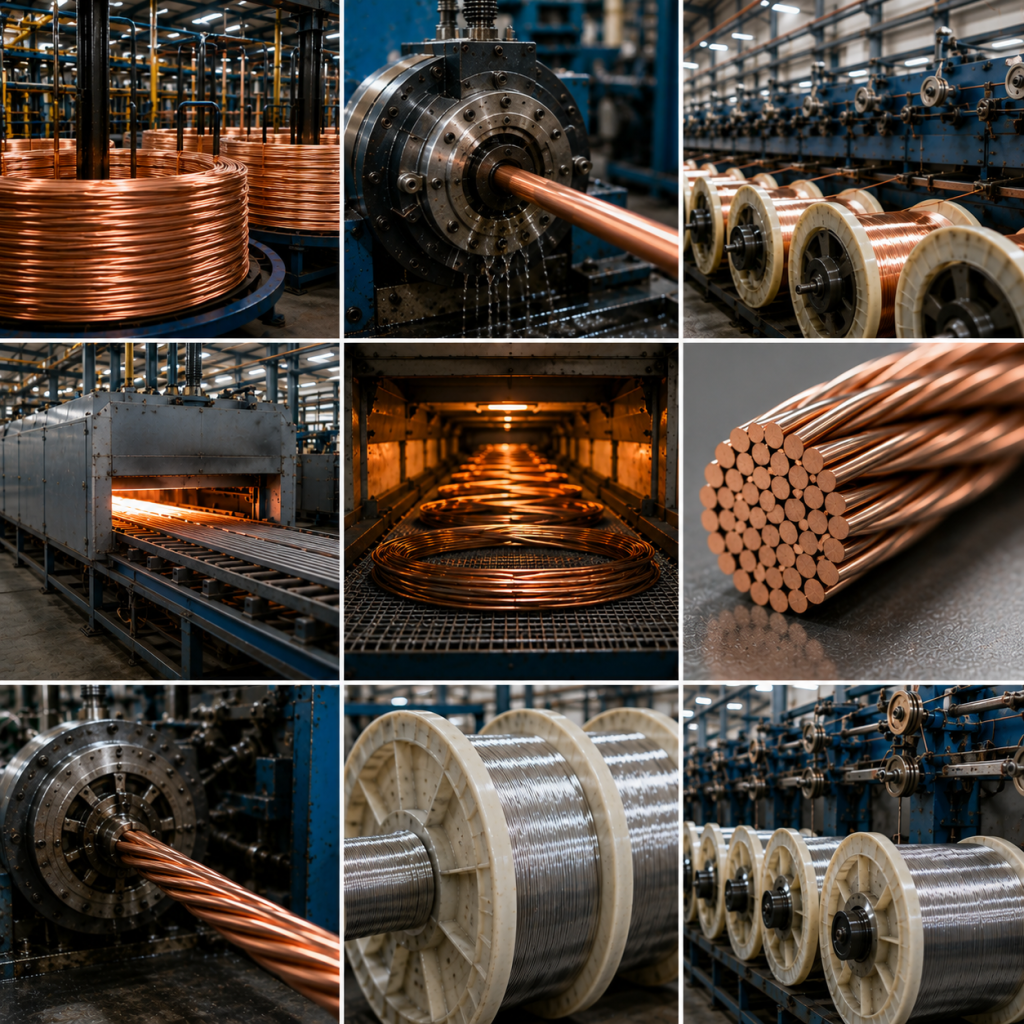
We have in-house copper/aluminum drawing, annealing, and plating facilities for manufacturing high-quality, customized conductive materials. This integrated approach allows for strict control over the wire diameter, material ductility, and surface quality.
Rod Breakdown & Wire Drawing: copper/aluminum rods are reduced in diameter through dies, with capabilities ranging from medium to fine wire drawing.
Precision Reduction: The capability to draw copper and aluminum to specific, often microscopic, diameters.
Multi-wire Production: Utilization of modern drawing machines that can produce multiple wire strands simultaneously to increase efficiency.
Multi-pass Process: The ability to move wire through multiple drawing dies to reduce the diameter.
Annealing Capabilities – A heat-treatment process that restores its ductility and softness, reversing the brittleness caused by work-hardening, bending, or shaping.
Stranding & Bunching: Copper stranding and bunching combine multiple thin copper wires into a flexible conductor. Both processes improve flexibility, durability, and overall cable performance compared to solid wire.
Plating: Tin plating is applied to enhance corrosion resistance and solderability.
From Size 0.175 mm up to 4.0 mm
*From Size 0.50 mm to 4.0 mm
Direct oversight of the entire proces from raw material drawing to final surface plating ensures consistency.
Ability to create custom, precise wire diameters to meet unique client needs.
In-house annealing ensures that copper and aluminum retain high electrical conductivity, while plating provides the necessary surface finish
Integrated facilities reduce logistics and handling time, allowing for faster turnaround on orders.
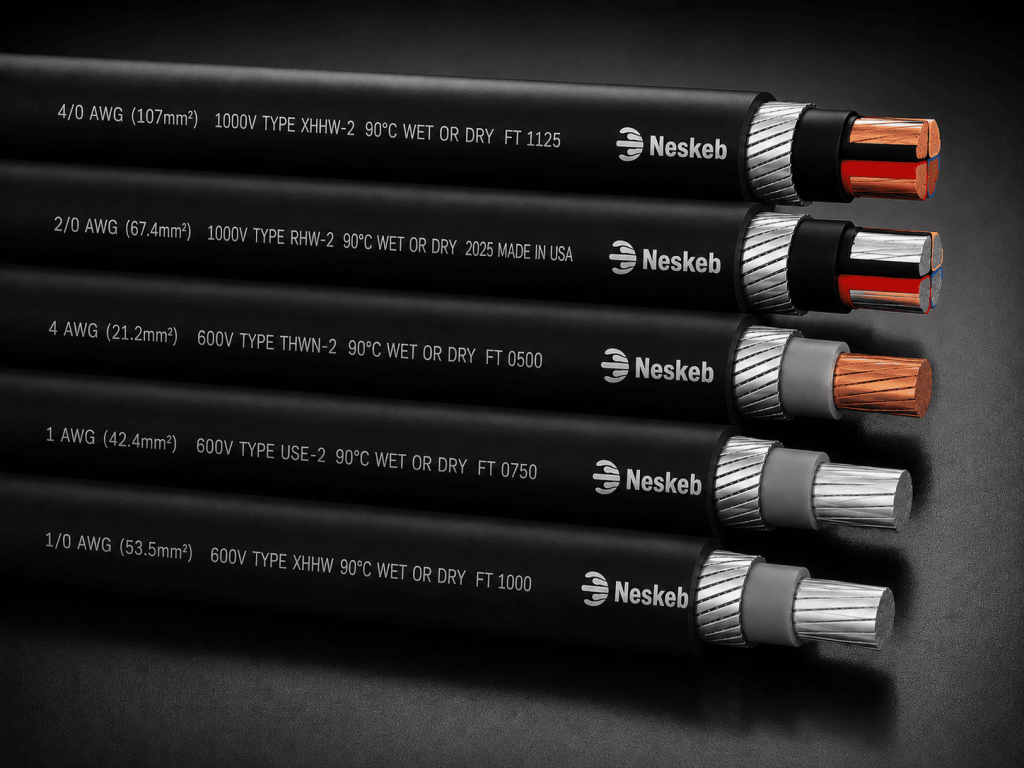
Cable jacketing materials protect internal conductors from environmental, chemical, and mechanical damage. Jackets/Sheathing provide mechanical protection to the insulation and conductor core. In order to provide the best possible protection for the cable, a jacket can be modified by the addition of fillers, plasticizers, activators, and inhibitors to enhance a particular physical characteristic. Neskeb has facilities for extrusion of many different types of both thermoplastic and thermoset jackets, and the options listed below are only a small array of the choices one has with cable jacket types.
LS0H = Low Smoke Zero Halogen
PVC Type ST-2
PVC Type A
NBR = Nitrile
Butadiene Rubber
TPE = Thermoplastic elastomer
EPR = Ethylene propylene rubber
EPDM = Ethylene Propylene Diene Monomer
We specialize in producing a wide variety of custom cables. Our advanced manufacturing processes ensure consistent quality, durability, and performance across all products. Cable construction involves conductors, cable arrangement, and insulation and finish covering. We offer the following options of construction in our cables.
Single Conductors
Multi Conductors
0.25 SQ MM – 400.0 SQMM
Composite construction
Non-Shielded
Individual Shielded
Overall Shielded
Taped Conductor
1-61 conductors (depending on sq mm)
1-50 Pair
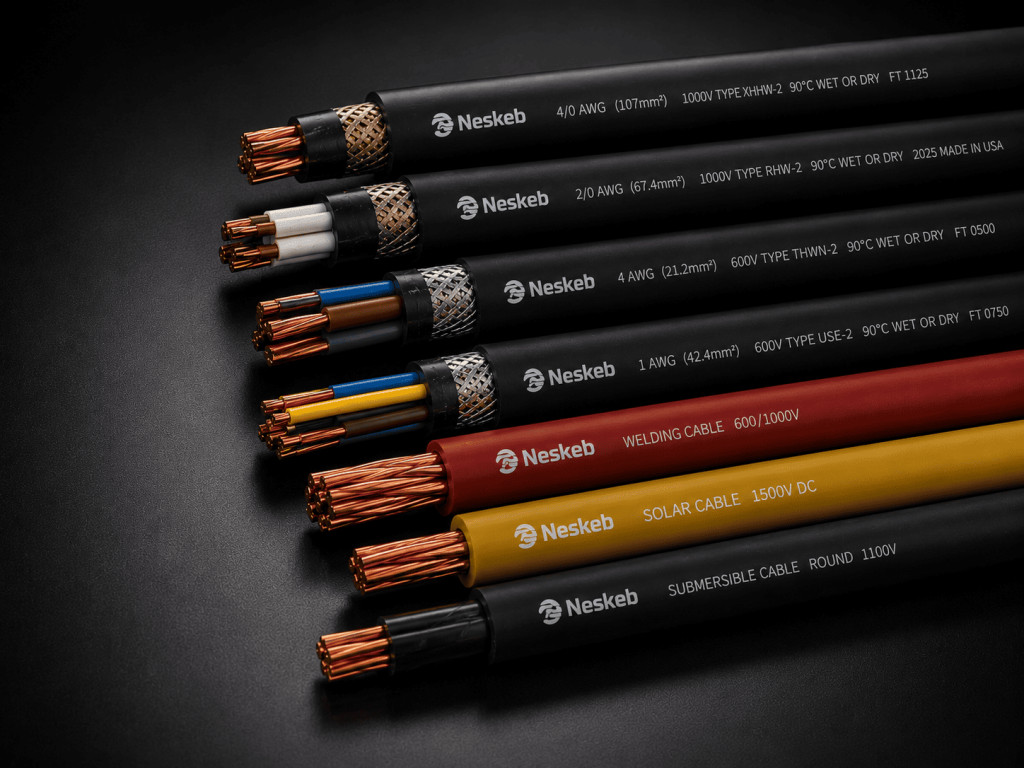
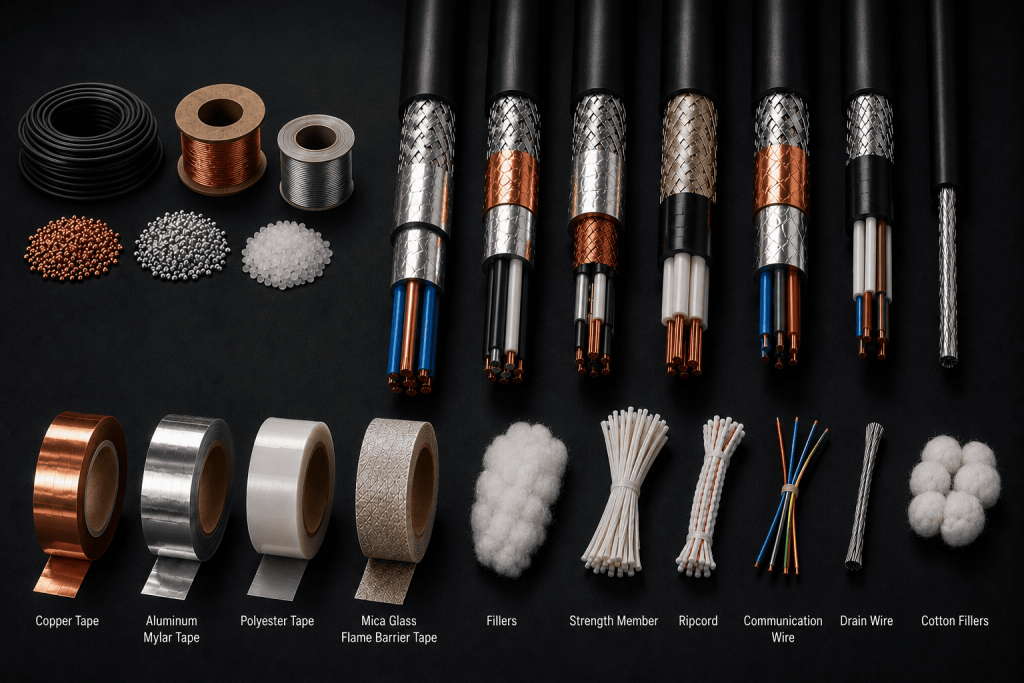
A shield, or screen, is a metallic layer placed over one or more insulated conductors to either protect them from, or prevent them causing electrical interference. Tapes, or binders, and fillers are applied to improve flexibility or roundness of the cable, to protect the insulation or sheath, or to ease production.
The cable extrusion process can be defined as the primary manufacturing process associated with insulated cables and wires. It incorporates the continuous application of pressure and heat to mold the polymer into a form that can insulate dielectric material around a conductive core. Melting polymer also gives additional properties. This extrusion process uses an extruder, a machine that melts and combines the raw material, which in most cases is some form of thermoplastic or thermosetting polymer. The extruder heats the raw materials and pushes them through a die, forming them into profiles aimed at cables and wires. The other parts of the extrusion line, for instance, the hopper, barrel, screw, and die, are also crucial as they assist in regulating the process of extrusion, as well as ensuring that the consistency and quality of the produced material are up to standards. The cable extrusion technology is widely used in the wire and cable industry as it enhances the ability to manufacture cables that come in different sizes, shapes, types of insulation, and performance characteristics. It also meets its aim of serving various purposes.