
In the electrical industry, ensuring the reliability and safety of cables is important. Reliable cables are critical for the efficient operation of electrical systems, and rigorous testing is necessary to verify their performance.
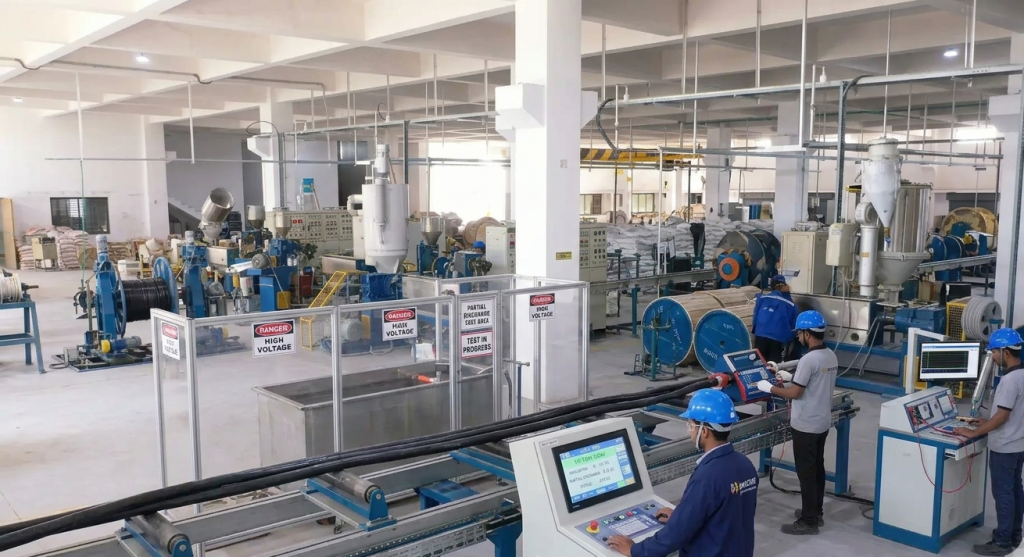
Cable testing refers to a series of procedures used to evaluate electrical cables’ performance, safety, and durability. It involves assessing various attributes such as insulation resistance, conductivity, dielectric strength, and physical integrity to ensure that cables meet industry standards and function reliably under their intended conditions. Cable testing helps identify potential issues before installation and ensures that cables will perform safely and effectively throughout their lifecycle.
Routine tests may differ from one cable type to the next and will be clearly specified in the relevant cable standard. These tests are often non-destructive, some of which may be conducted in line during the manufacturing process and before commissioning.
The insulation test, also known as a high resistance test, checks the insulation of cables using direct current (DC). This test, often combined with short-circuit and high-voltage tests, is essential for electrical safety and maintenance. It helps identify insulation problems early, ensuring that cables are safe, reliable, and meet the safety standards of cables.
Partial discharge (PD) testing inspects the insulation condition in critical electrical equipment like cables, transformers, and switchgear. PD occurs when there are small breakdowns in insulation, leading to minor electrical discharges. These discharges can damage the insulation and cause equipment failure if not addressed. PD testing helps detect these issues early, allowing for timely repairs and improving the overall safety and reliability of the electrical system.
A continuity test checks if there is a complete path for electrical current to flow through a circuit. A tester or multimeter sends a small current through the circuit. If the circuit is intact, the current will flow through it and return to the tester, usually indicated by a beep or a visual signal. This test ensures that the circuit is continuous and functioning properly.
Earth resistance testing measures the effectiveness of an earthing system in safely directing fault currents to the ground. This test is crucial for electrical safety and ensuring that installations comply with safety standards. A good earth resistance system helps prevent electrical shocks and equipment damage.
High voltage testing ensures that electrical equipment and installations can handle high voltage without breaking down. This test helps prevent electrical faults and hazards by identifying potential insulation problems early. It plays a key role in minimizing downtime and preventing shocks, fires, and equipment damage.
Low voltage testing is important for maintaining the safety and reliability of low-voltage electrical systems. This includes checking cable insulation resistance and ensuring a continuous path for current flow. These tests help identify issues before they cause problems, ensuring low-voltage systems operate securely and effectively.
Ensuring cable reliability is fundamental to the safe and efficient operation of electrical systems. Potential issues can be identified and addressed early through comprehensive cable testing, ranging from insulation and partial discharge tests to continuity and high voltage assessments. This proactive approach not only helps prevent costly downtime and extends the lifespan of cables but also ensures compliance with regulatory standards and optimal performance of electrical systems. For those seeking high-quality cables that meet these rigorous standards, exploring reliable solutions is crucial to maintaining system integrity.